
In modern agriculture, farmers around the world are facing increasing challenges: extreme weather (drought, cold, heat), soil degradation, pest and disease pressure, and the need to reduce chemical fertilizer use while improving crop yield and quality. As a natural, organic bio-stimulant, seaweed extract fertilizer has become a reliable solution for addressing these challenges. But how exactly do seaweed extracts work to enhance crop stress resistance and boost yield?
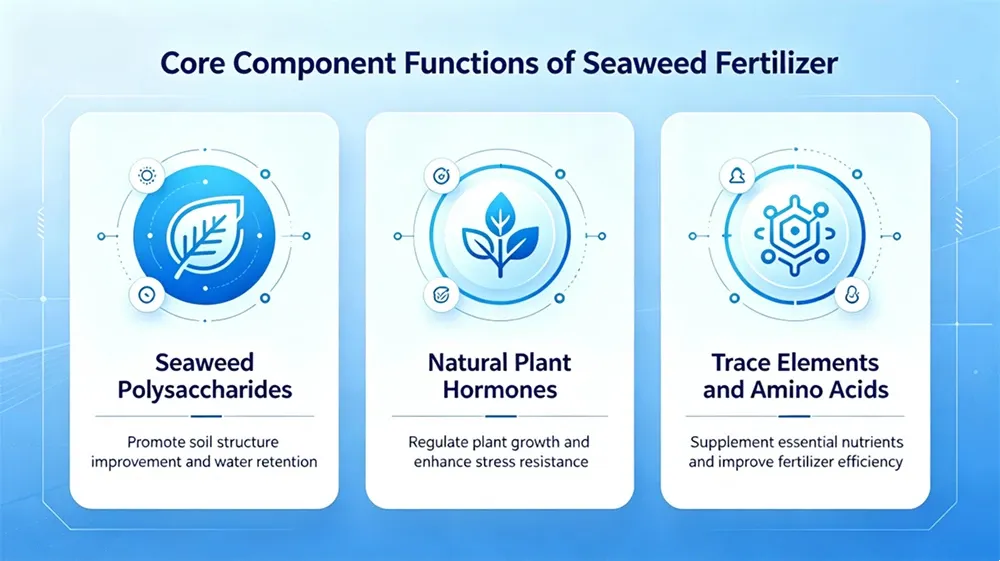
Seaweed, as a marine organism that has evolved for millions of years, contains a wealth of bioactive substances and nutrients that are not found in traditional fertilizers. These components work synergistically to regulate crop growth, strengthen stress resistance, and improve yield potential. The key active ingredients include:

Seaweed polysaccharides (such as alginate, carrageenan, and fucoidan) are the core active components of seaweed extracts. They can be quickly absorbed by crop roots and leaves, and play multiple roles: first, they enhance the water-holding capacity of plant cells, reduce water loss under drought conditions, and help crops maintain normal physiological functions in arid environments. Second, they stimulate the synthesis of plant cell walls, making the cell structure more stable, which helps crops resist mechanical damage and pathogen invasion. Third, they promote the growth of beneficial microorganisms in the soil, improve soil structure, and enhance soil fertility, laying a solid foundation for crop growth.
Seaweed extracts contain a variety of natural plant hormones, including auxins, cytokinins, gibberellins, and abscisic acid, which are mild and compatible with crop growth rhythms (unlike synthetic hormones that may cause overgrowth). Auxins promote root development, enabling crops to absorb water and nutrients more efficiently; cytokinins delay leaf senescence, extend the photosynthetic period, and increase the accumulation of photosynthetic products; gibberellins promote cell elongation and fruit development, improving fruit size and yield; abscisic acid helps crops adapt to adverse environments such as cold and drought by regulating the closure of stomata and the synthesis of stress-resistant proteins.
Seaweed is rich in essential trace elements for crops (such as iron, zinc, manganese, boron, and molybdenum), which are present in chelated form, making them easier for crops to absorb and utilize, avoiding the problem of nutrient deficiency that affects yield. In addition, seaweed extracts contain a variety of free amino acids, which are the basic raw materials for protein synthesis in crops. They can quickly supplement the nutrients needed by crops, enhance the activity of enzymes in crops, and improve the efficiency of photosynthesis and nutrient metabolism.
Crop stress (abiotic stress such as drought, cold, heat, and salinity; biotic stress such as pests and diseases) is the main factor affecting crop yield and quality. Seaweed extracts enhance crop stress resistance through multiple pathways, helping crops "withstand" adverse environments.
For drought and water shortage: Seaweed polysaccharides and abscisic acid in seaweed extracts can reduce the opening degree of crop stomata, reduce transpiration water loss, and at the same time improve the water-holding capacity of plant cells, enabling crops to maintain normal growth under water-deficient conditions. Field tests have shown that crops treated with seaweed fertilizer can reduce water loss by 20%-30% under drought conditions, and the survival rate is significantly higher than that of untreated crops.
For cold and frost damage: Natural plant hormones and amino acids in seaweed extracts can promote the synthesis of soluble sugars and proline in crops. These substances can lower the freezing point of plant cell sap, reduce cell damage caused by low temperature, and enhance the cold resistance of crops. For example, wheat and rapeseed treated with seaweed fertilizer can still grow normally at low temperatures of -5℃ to 0℃, reducing the loss caused by frost.
For soil salinization: Seaweed polysaccharides can chelate excess salt ions in the soil, reduce the damage of salt ions to crop roots, and at the same time promote the growth of crop roots, enhance the ability of roots to absorb water and nutrients, and help crops adapt to saline-alkali soil environments.
Seaweed extracts can enhance the resistance of crops to pests and diseases in two ways: on the one hand, they stimulate the crop to produce defense substances (such as phytoalexins and chitinase), which can inhibit the growth and reproduction of pathogens and reduce the occurrence of diseases; on the other hand, they improve the physical barrier of crops (thickening cell walls), making it difficult for pests and pathogens to invade. At the same time, the growth of beneficial microorganisms in the soil promoted by seaweed extracts can also inhibit the growth of harmful pathogens, forming a natural "protective barrier" for crops.
The promotion of crop yield by seaweed extracts is not only due to the improvement of stress resistance, but also the comprehensive regulation of crop growth and development, which maximizes the yield potential of crops.
The auxins and seaweed polysaccharides in seaweed extracts can stimulate the growth of crop root hairs and lateral roots, increase the root system's contact area with the soil, and enhance the root system's ability to absorb water and nutrients. A well-developed root system is the foundation of high yield. Crops treated with seaweed fertilizer have a root system that is 30%-50% more developed than that of untreated crops, which can better absorb nutrients such as nitrogen, phosphorus, and potassium in the soil, avoiding nutrient waste and improving fertilizer utilization efficiency.
Seaweed extracts can increase the content of chlorophyll in crop leaves, enhance the activity of photosynthetic enzymes, and extend the photosynthetic period. Photosynthesis is the process of crops converting light energy into chemical energy and accumulating organic matter. The improvement of photosynthesis efficiency means that crops can produce more nutrients, which are transported to fruits and grains, thereby increasing yield. Tests have shown that seaweed fertilizer can increase the photosynthesis rate of crops by 15%-25%, and the yield can be increased by 10%-30% for different crops.
The cytokinins and gibberellins in seaweed extracts can regulate the balance between vegetative growth and reproductive growth of crops, promote flower bud differentiation, improve the rate of fruit setting, and reduce flower and fruit drop. For fruit and vegetable crops, seaweed fertilizer can not only increase the number of fruits, but also improve the fruit size and uniformity, and enhance the fruit quality (such as sugar content and vitamin content).
To maximize the effect of seaweed fertilizer, farmers can pay attention to the following points in application:
Application time: It is recommended to apply during the key growth periods of crops, such as seedling stage, root growth stage, flowering stage, and fruit expansion stage. For stress resistance, it can be applied 7-10 days before the occurrence of adverse weather (such as drought and cold) to enhance the stress resistance of crops in advance.
Application method: It can be used for foliar spraying, root irrigation, or seed soaking. Foliar spraying is fast-acting and suitable for supplementing nutrients and enhancing stress resistance; root irrigation is conducive to promoting root development and improving soil environment.
Compatibility: Seaweed fertilizer can be mixed with most chemical fertilizers, pesticides, and other bio-stimulants, which can improve the effect of other inputs and reduce the use of chemical fertilizers and pesticides.

With our premium fertilizers and professional technical support, you can experience a tangible difference. Together, we will cultivate a greener, more prosperous future for global agriculture.

Premium seaweed extracts and biostimulants for sustainable agriculture. Revive the natural vitality of farmland and restore your soil to its original softness and health.